Home / The Slow Aging of a Slab That Runs Down to the Floor
The Slow Aging of a Slab That Runs Down to the Floor
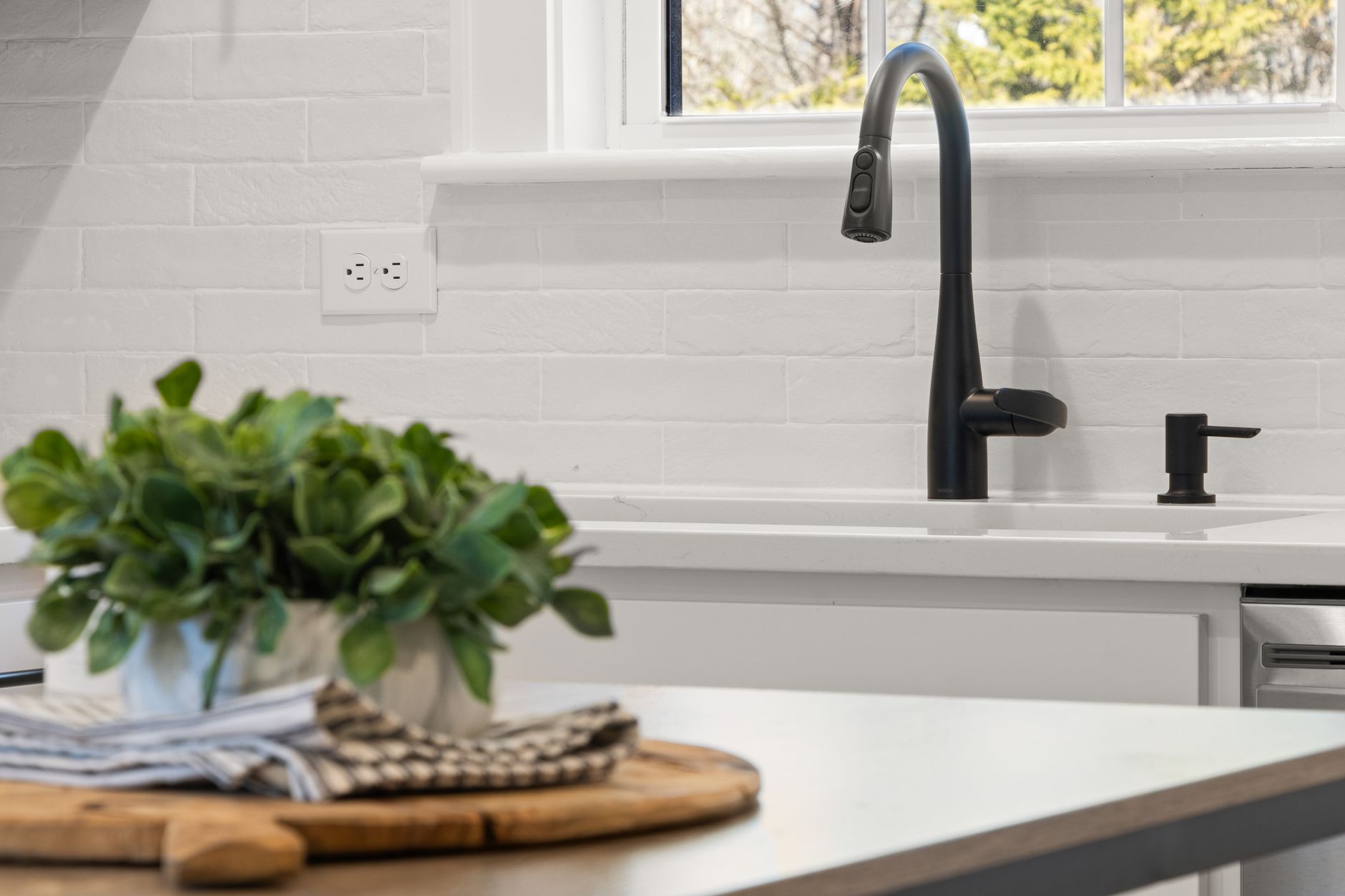
A slab that drops from the island top straight to the floor takes more daily abuse than the flat surface above it, and that is the first thing a new owner tends to miss. The top gets wiped and admired. The vertical face gets bumped by stools, brushed by mops, hit by vacuum wheels and baked by whatever sun comes through the nearest window. Over the years those small events add up, and they add up in predictable places.
What a waterfall edge is made of
A waterfall edge is a pair of pieces joined at a corner. One piece forms the island top, and the other turns ninety degrees and runs down the side to the floor. In most kitchens the two meet at a mitre, meaning each piece is cut at a forty five degree angle so the stone pattern appears to flow over the corner without a visible break. Behind that clean look sit several details that age at different speeds: the glue line at the mitre, the cut edge at the floor, the face that people lean against, and the small gap between the stone and the cabinet base.
Knowing which detail wears first lets an owner spend attention where it counts instead of fussing over the whole slab.
The mitred corner and its adhesive line
The mitre is the part of the edge that gets the most attention at installation and the least afterward. The two pieces are bonded with a colour matched adhesive, and a good fabricator leaves a joint thin enough that it reads as a faint hairline. As covered in the full breakdown of waterfall edge habits on this site, the joint itself is rarely where trouble starts. Trouble starts when the pieces move slightly against each other or when moisture finds the line and sits there.
The adhesive is strong, but it is also slightly softer than the stone around it. That means it can pick up a little more dirt, and it can show a faint shadow where grease or cleaning residue collects in the hairline. An owner who notices a darker thread along the corner is usually looking at buildup, not a failing bond. A soft brush and a neutral cleaner lift it in most cases.
Real bond failure looks different. The line widens, a tiny step appears where one piece sits higher than the other, or a sliver of the adhesive flakes out. Those signs point to movement in the cabinet below, a heavy impact on the corner or a slab that was not fully supported during installation.
The seam at floor level
The bottom of the vertical piece is where the stone meets a different world. Floors get mopped, and mop water travels. It runs along the base, creeps under the edge and sits in the narrow gap where the stone meets the flooring. Vacuum cleaners and robot cleaners strike the same spot hundreds of times a year.
The cut edge at the floor is the most exposed raw edge in the whole kitchen. If the edge was eased and polished well, it handles a lot of contact. If it was left sharp, tiny chips can appear along the bottom corner after a few years of bumps. Chips here are almost always cosmetic, but they collect dirt and make the base look tired.
Two habits protect this area:
- Wring a mop out well and keep the damp head off the stone itself.
- Steer a vacuum or robot cleaner away from the base with a soft bumper or a line of tape on its path, so it stops brushing the edge.
Stools, chairs and knees
If the vertical face sits at the end of a seating area, it becomes the place where people rest feet, knees and bags. Stool legs scrape the surface. Metal feet are worse than rubber ones, and a gritty floor under a stool leg turns each scoot into a sanding pass.
The face also takes small impacts at the height of a child's head or a swinging chair back. A hard knock on a thin corner can chip it, and the damage tends to appear at the outside edge of the slab where the stone is least supported. Felt pads on stool feet cost almost nothing and remove most of this wear. A habit of lifting a stool instead of dragging it does the rest.
The toe-kick gap and house movement
Between the bottom of the cabinet and the floor sits the toe kick, a recessed strip that gives feet room. Where a waterfall piece meets this area, a small gap often remains between the stone and the base trim. That gap is deliberate. Houses move, floors settle and cabinets shift as humidity changes, and a rigid stone panel pressed tight against everything would have nowhere to go.
In Lakewood, where many homes date from the 1950s and sit on older slab foundations with small original kitchens that were later opened up, floors are often not perfectly level. A modern island with a heavy vertical stone panel can settle slightly into that reality. The gap may narrow or widen by a hair across the seasons. That is normal. What is not normal is a gap that grows steadily, a crack that follows it or a cabinet that visibly leans away from the stone. Any of those justifies a call to the fabricator, because a settling island can load the mitre in ways it was never meant to carry.
Sun on the exposed face
The exposed face is often the only stone surface that catches light at a low angle. A west facing window or a glass door beside the island throws strong afternoon sun along the vertical piece. Ultraviolet light does little to the stone itself, but it can warm the face enough to tint certain resin fillers and to dry out a sealer faster than on the shaded top.
Mild coastal weather in Lakewood keeps temperatures gentler than inland valleys, so heat stress is rarely the concern. Brightness is. A face that gets two or three hours of direct light every afternoon may need its sealer refreshed sooner than the top does. A simple sheer curtain or a light window film slows this down at almost no effort.
A worked example: one waterfall island across eight years
Picture a family kitchen with one waterfall end, stools along the back, a mop used weekly and a window on the south side. Here is how the details might realistically age.
- First year: everything looks new. The mitre is a hairline, the sealer beads water and the base is clean. The only change is the first few scuffs from stool legs.
- Second and third years: a faint shadow appears along the mitre where cleaning residue gathers. A quick brushing removes it. The bottom edge shows one or two tiny chips from a vacuum.
- Fourth and fifth years: the sealer on the sun side stops beading in one patch. It is cleaned and resealed. Felt pads are replaced after the originals wore through, and a few light marks show where they were missing.
- Sixth and seventh years: the toe-kick gap has shifted slightly after a wet winter, and the owner tightens a loose base trim. The mitre still looks tight, though a careful eye can see the line a little more clearly.
- Eighth year: a fabricator is asked to look at the bottom corner, polishes out the accumulated chips and checks the joint. The edge is back to its early look.
Nothing in that sequence is dramatic. Each step has a small, cheap answer, and none of them required replacing stone.
Habits that stretch the life of the edge
The edges that last longest are almost always the ones with the same few habits behind them:
- Wipe spills off the vertical face the same day, since it gets splashed more than owners expect.
- Use felt pads on every stool and chair that touches the stone.
- Keep mop water away from the base and dry the floor edge after cleaning.
- Test the sealer with a few water drops on the face once or twice a year, not just on the top.
When to ask a fabricator
Some signs deserve a professional look instead of another round of cleaning. A mitre that steps out of alignment, a crack that starts at the base, a gap that keeps growing, a chip that catches a fingernail or a seam that darkens and stays dark after cleaning all fall into that group. A fabricator can re-bond a joint, fill and polish a chip and judge whether the cabinet below needs shimming. Early attention is cheap compared with waiting for a small movement to become a cracked panel.
Putting the timeline to use
A waterfall edge ages in layers, with the floor level wearing first, the sun face drying next and the corner staying tight the longest when it is treated gently. The notes kept at lakewood countertops record suggest that owners who check these spots once a season, rather than once a year, catch nearly every problem while it is still a small repair. That is the practical goal: not to keep the stone untouched, but to notice each detail changing while it can still be fixed with a brush, a pad or a quick polish.